
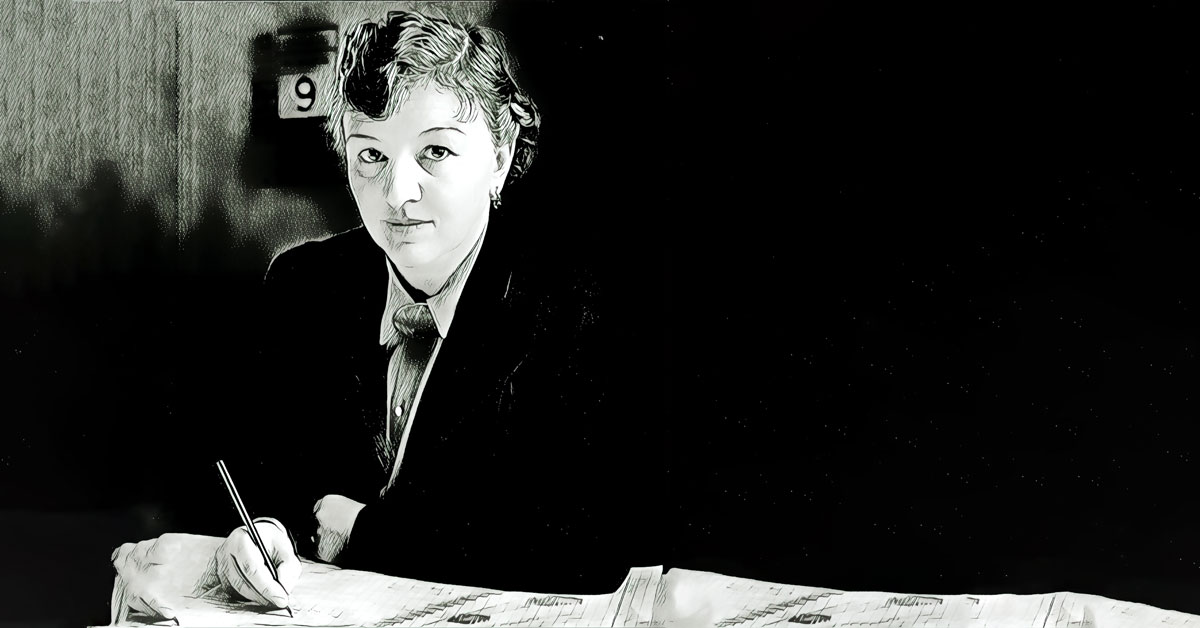
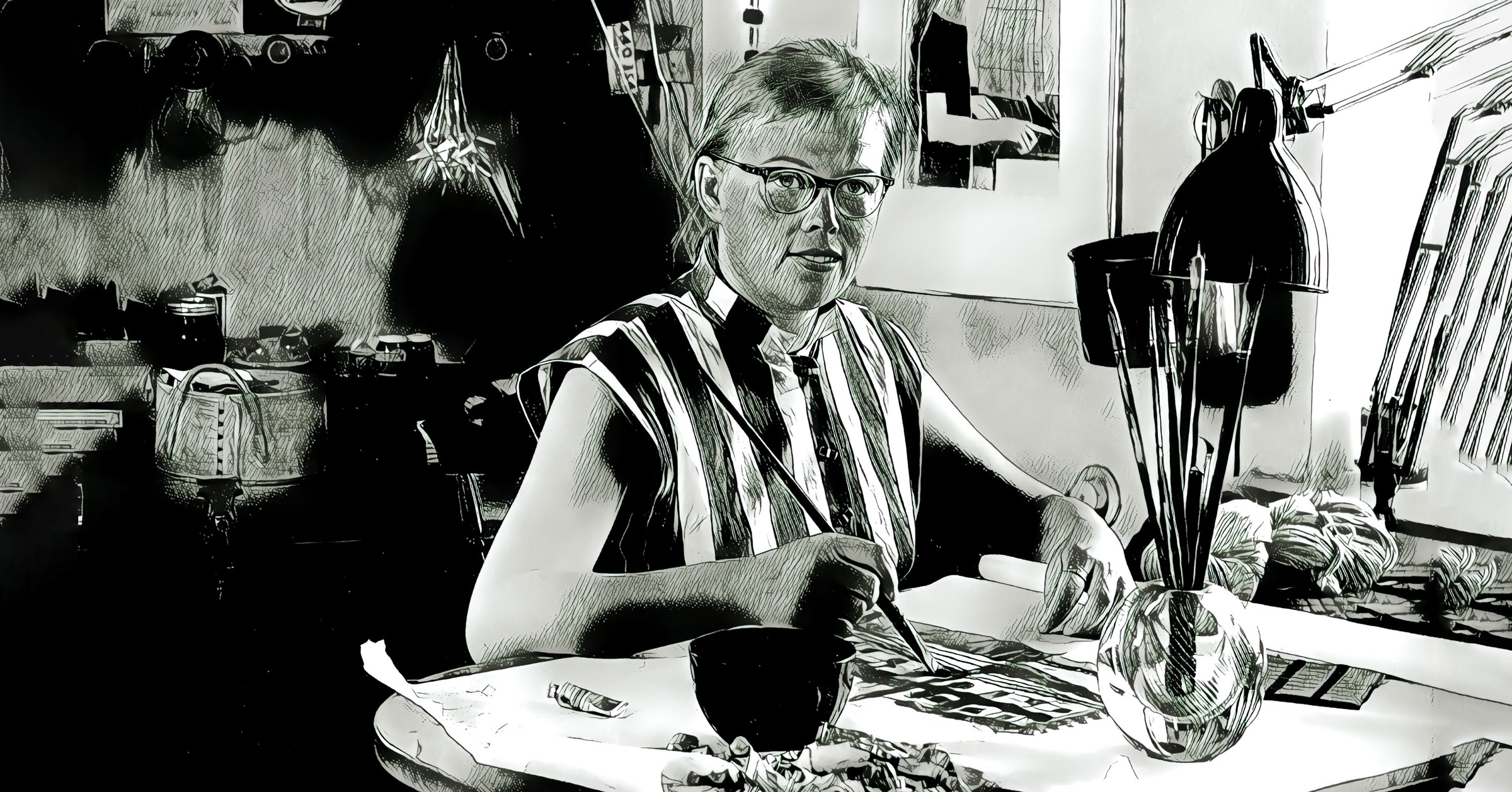
Märta Måås-Fjetterström (1873 – 1941) did not weave her own rugs. She liked to compare herself to a composer: she drew the designs, and the weavers at her studio in Båstad played them. Together they made nearly 700 works, mostly pile rugs and hautelisse tapestries, and the company she founded still weaves her patterns.
She was born Märta Fjetterström in Kimstad in Östergötland and grew up in Vadstena, where her father was the vicar. She wanted to be an artist, studied at Högre konstindustriella skolan in Stockholm, now Konstfack, and then taught drawing in Jönköping. Georg Karlin, who founded the museum Kulturen in Lund, asked her to design weavings to be given as prizes in the museum’s lottery, and in 1902 she joined Kulturen as a weaving teacher. From 1905 she ran the Malmöhus county handicraft shop in Malmö. Her tapestry Staffan Stalledräng was shown in Stockholm in 1909 and bought by Röhsska in Gothenburg. In 1911 the handicraft society let her go, saying she had done too little for the old Skåne weaving traditions. Lilli Zickerman then asked her to run the weaving school at Vittsjö, where she drew bolder patterns for the students to weave.
The Baltic Exhibition in Malmö in 1914 was her first big success. Sankt Göran och draken, a design she had been working on for thirteen years, was finally woven for it. Ludvig Nobel, Alfred Nobel’s nephew and known as the king of Båstad, bought her pile rug Hjorthagen, which hung in King Gustaf V’s suite at Nobel’s hotel Skånegården. Nobel introduced her to wealthy clients, the royal family among them, and talked her into moving to Båstad. In 1919, at 46, she bought Strandgården, an old brick building by the harbour, and opened her studio there, living on the floor above the looms. The weavers came from Vittsjö and the Bjäre peninsula, and under an agreement with the handicraft association she trained five students a year for free. Many of them stayed on.
At the 1923 Jubilee Exhibition in Gothenburg a whole wall of the textile hall was hers. There she met Carl Malmsten, who became a friend and partner for the rest of her life. They opened a shop and showroom together in central Stockholm and furnished a living room at Ulriksdal Palace in 1924, a wedding gift to Crown Prince Gustaf Adolf and Louise Mountbatten, then the liner M/S Gripsholm in 1928 and the Swedish Institute in Rome in 1940. In Paris in 1925 her draperies Kungsljus and Skära hung with Malmsten’s furniture and were an instant success. Her work clashed with the functionalism that ruled the 1930 Stockholm Exhibition, but the world’s fairs in Chicago in 1933 and Paris in 1937 went well, and in 1934 she showed at Liljevalchs alongside Elsa Gullberg, Malmsten and Estrid Ericson‘s Svenskt Tenn. Her last show abroad was the New York World’s Fair of 1939 – 1940, with the rug Blåplump. The studio’s rugs range from big pile rugs such as Svarta trädgårdsmattan and Örtagården to the plain flatweave Blå bårdmattan.


She died on Easter Day 1941 after an illness. The studio’s 23 looms stood still for half a year, and the estate nearly went to an American textile company before Malmsten led a fundraising drive to keep the business in Båstad. AB Märta Måås-Fjetterström was formed in January 1942 with Barbro Nilsson as artistic director, joined by Ann-Mari Forsberg and Marianne Richter and later by Barbro Sprinchorn and Kaisa Melanton. The company still looks after her archive of sketches, working drawings and woven samples, and works with new designers: in 2006 it launched three flatweave rugs by Claesson Koivisto Rune. In 2019 and 2020 the Royal Palace in Stockholm marked the studio’s centenary with the exhibition Se på mattorna – det är jag! (Look at the rugs, that’s me!).
- Märta Livia Vilhelmina Måås-Fjetterström, born Fjetterström
- 1873 – 1941
- Studied at Högre konstindustriella skolan, Stockholm
- Kulturen in Lund from 1902; Malmöhus county handicraft shop 1905 – 1911; weaving school at Vittsjö
- Founded her weaving studio at Strandgården in Båstad, 1919; nearly 700 works
- Interiors with Carl Malmsten: Ulriksdal Palace (1924), M/S Gripsholm (1928), the Swedish Institute in Rome (1940)
- Represented at Nationalmuseum, the Louvre and Röhsska museet
Sources:
Företagshistoria: Mattdrottningen Märta Måås-Fjetterström (Anders Houltz, 2020)
Svenskt kvinnobiografiskt lexikon: Märta Måås-Fjetterström (Annika Persson)
Svenskt biografiskt lexikon (Riksarkivet): Märta Måås-Fjetterström
Read next: Elsa Gullberg, who also worked for Lilli Zickerman and showed beside her at Liljevalchs in 1934, and Dora Jung, who ran her own weaving studio in Helsinki. All textile designers are here.

Leave a Reply