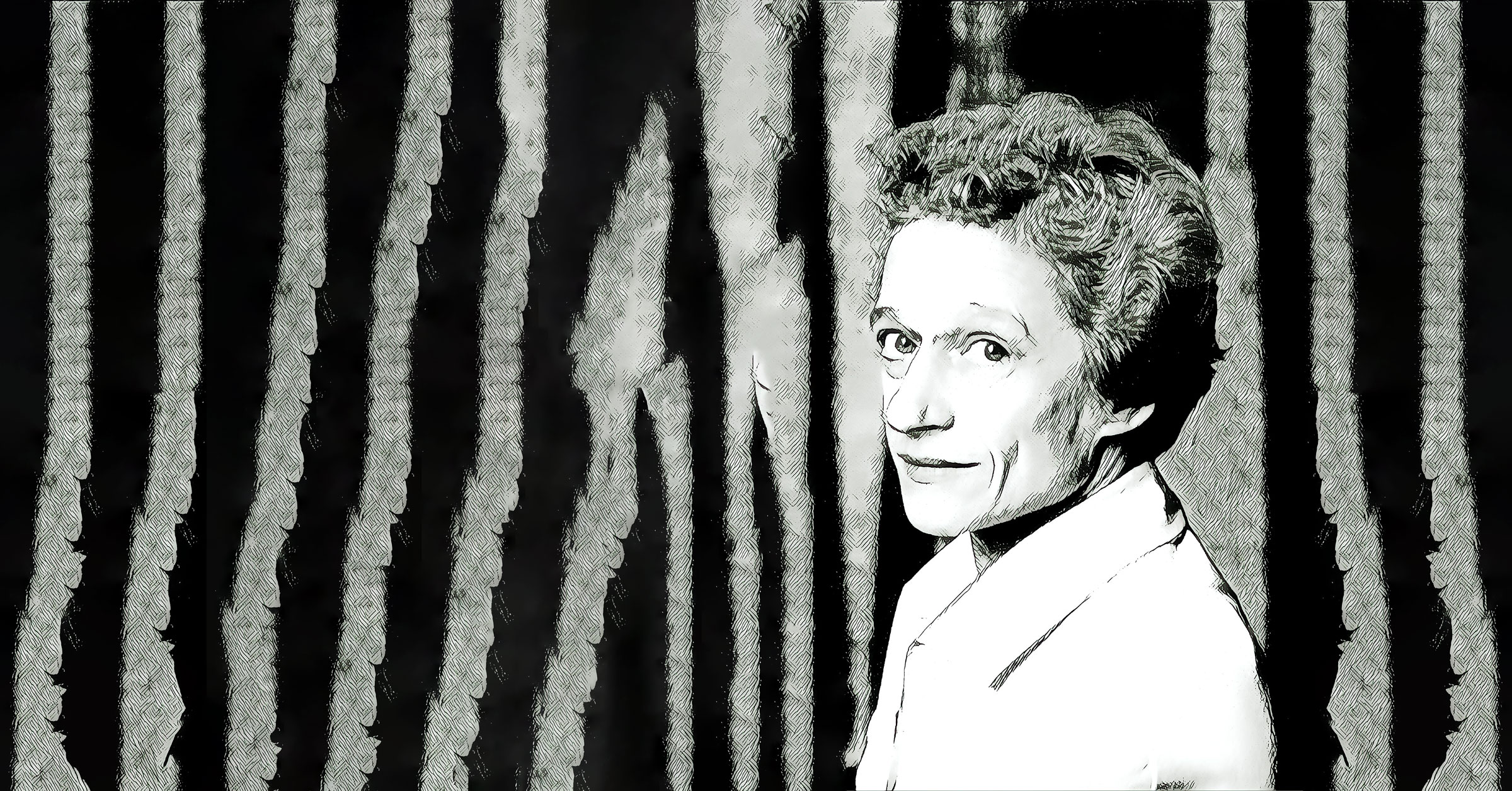
100 Ruusua, a hundred roses in linen damask, was Dora Jung’s tablecloth for Stockmann’s centenary in 1962. Kielo, lily of the valley, marked fifty years of Finnish independence in 1967. Her linens were made at Tampella, which stopped weaving linen in 1981. Today Lapuan Kankurit weaves them again from her original weave drawings: 100 Ruusua and Kielo, Kaarna (1964), the pine bark pattern, Anemone (1961) and Viivojen leikki, Play of Lines, the geometric cloth that won at the Milan Triennale. Her cloths carry Tampella’s TL mark and a small loom-like sign she called “My Horse”.
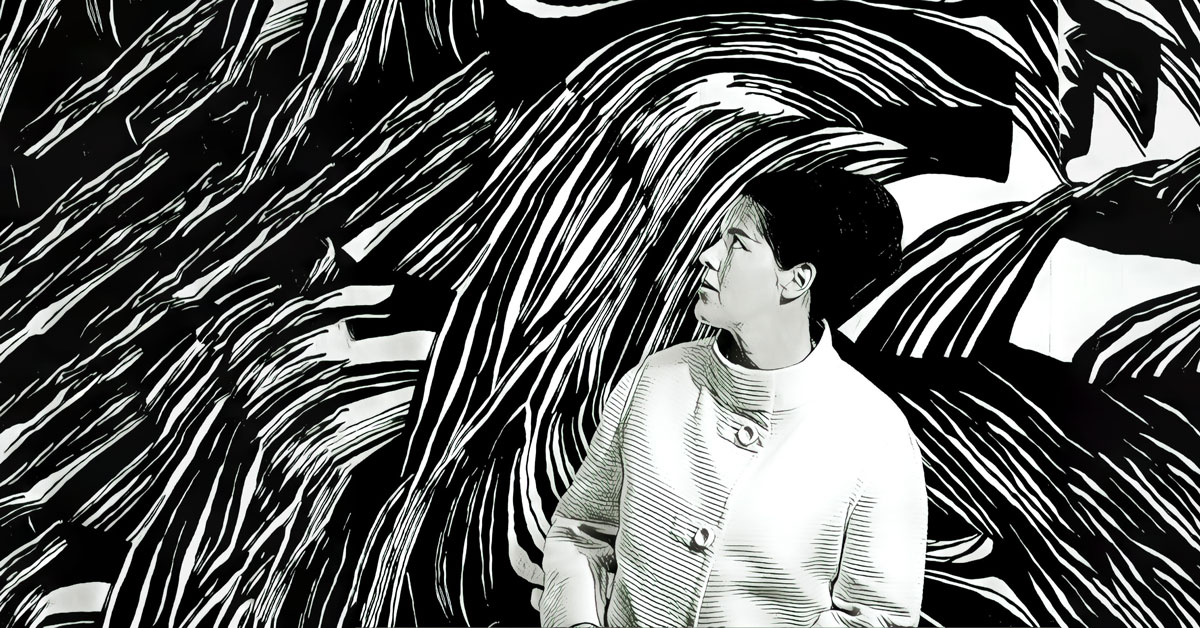
For Tampella she designed 24 tablecloth sets, six towel sets and 17 smaller household pieces. Her great technical contribution was to damask itself, which she developed so that multi-coloured damask became possible, with surface effects that give it an almost three-dimensional feel. At first she drew her designs on squared paper for the weavers, but for large pieces she switched to full-size drawings fixed under the work. Nature was her main source.
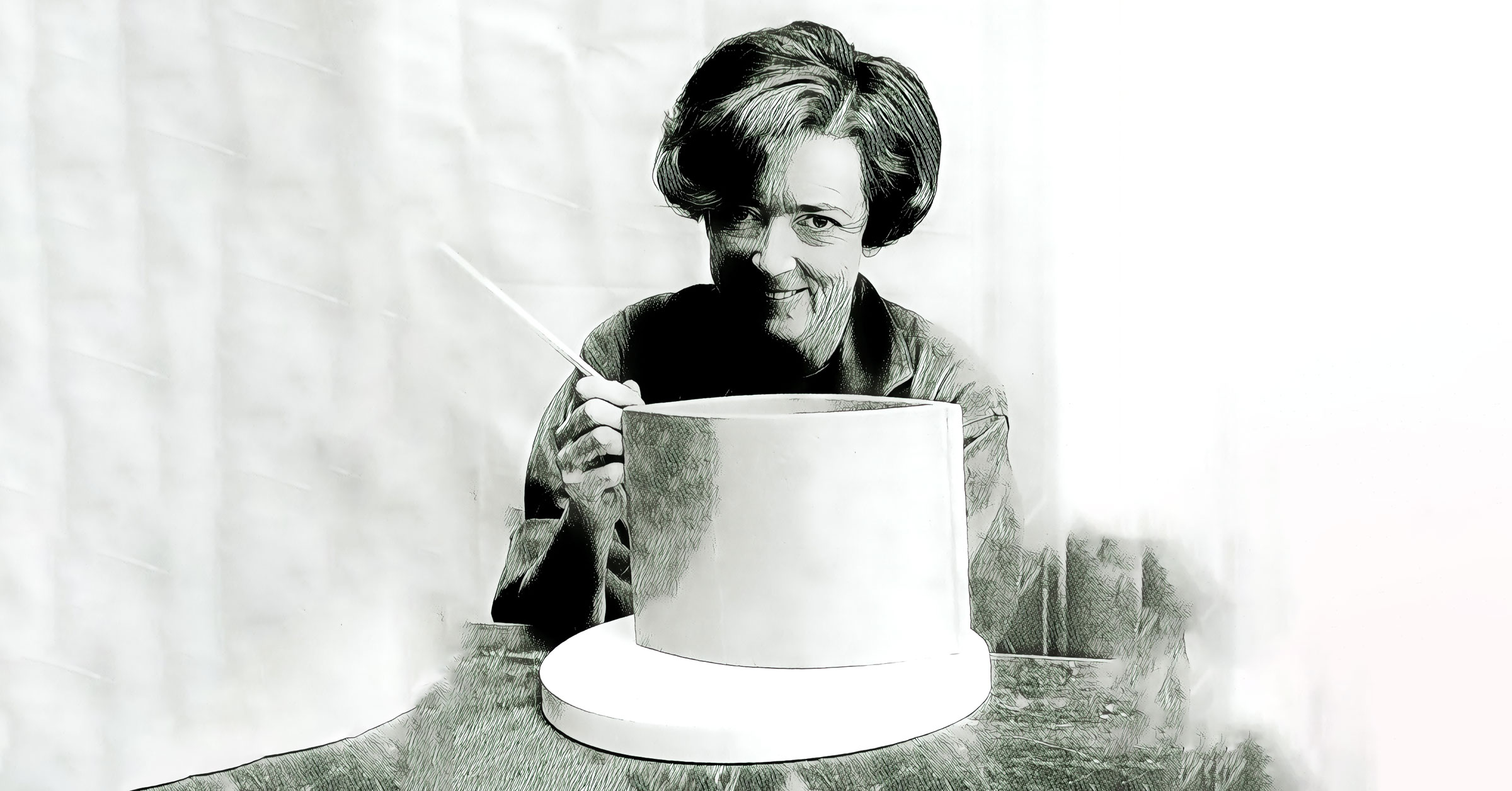
She was born Dora Elisabet Jung in Helsinki in 1906 into a family of architects: her father was Valter Jung and her uncle Bertel Jung. She studied in the textile department of the Central School of Industrial Arts from 1929 to 1932, and on graduating opened her own weaving workshop in central Helsinki, which she ran until her death. She designed for Tampella from 1936 to 1941 and again from 1959 to 1972, and taught drawing at the Helsinki girls’ vocational school from 1935 to 1945. She always called herself a craftswoman first and an artist second.
Church textiles were the third strand of her work, and her damasks are in more than seventy churches. The 1960s brought monumental commissions: the tapestry Katarina Jagellonica for Turku Castle and the Copper Wall and Gold Wall for the Bank of Finland (1961), Pohjanmaa ja terva for the North Ostrobothnian student nation (1966) and the stage curtain of Finlandia Hall (1971). Other works went to Nationalmuseum in Stockholm, the Danish Museum of Art & Design and Hässelby Castle. She won a gold medal at the Paris World’s Fair in 1937 for a linen damask tablecloth, the Grand Prix at the Milan Triennale in 1951, 1954 and 1957, the first of them for the hand-woven hanging Doves, the Pro Finlandia medal in 1955 and the Exempla prize in Munich in 1977. She died suddenly in 1980, at 74, leaving unfinished an altar linen for the Olari congregation in Espoo.


- Dora Elisabet Jung
- 1906 – 1980
- Central School of Industrial Arts, Helsinki, 1929 – 1932
- Own weaving workshop from 1932; designer for Tampella
- Grand Prix, Milan Triennale, 1951, 1954 and 1957
- Stage curtain, Finlandia Hall, 1971; damask tablecloths rewoven by Lapuan Kankurit
Sources:
Read next: Lisa Johansson-Pape, with whom she shared an exhibition in Stockholm in 1966, Greta Skogster-Lehtinen, who also ran her own Helsinki weaving studio for decades, and Marjatta Metsovaara, who also designed for Tampella. All textile designers are here.


Leave a Reply